+1 587-899-5870
+1 587-899-5870
Bespoke incineration facilities in Canada, for waste with no ready-made answer
World leaders in creating innovative, sustainable solutions for complex waste disposal challenges.
Over 40 years of building facilities where no ready-made solution exists.
Since 1982
Addfield’s manufacturing heritage
150+ countries
with Addfield installations
Fixed, stepped, rotary
Design to operation
Addfield’s manufacturing heritage
Specialists in creating bespoke facilities
For more than 40 years we have been redefining what waste disposal can be. As world leaders in incineration, we bring together expert engineering, proven reliability and a deep respect for the environment to build solutions for a changing world.
Standard machines cover most waste streams, and we supply plenty of them. Projects is for everything else: waste that is too variable, too hazardous, too voluminous or simply too unusual for a catalogue unit. We design the facility around the waste, not the other way round.
Our team has spent decades refining some of the most efficient incinerators in the world, so every waste stream you face is handled safely and in full compliance.
Waste streams we build for
From high-capacity municipal plants to the most demanding industrial streams, we design facilities where no ready-made solution exists.
Established waste streams
High-capacity waste: Continuous, high-throughput plants for sites where waste arrives by the tonne, not by the bag.
General and municipal waste: Plants sized to community and commercial volumes, with automatic loading and de-ashing.
Agricultural waste: Biosecure disposal of livestock and animal by-products at farm, cooperative or regional scale.
Medical waste: Compliant destruction of clinical and pharmaceutical waste for hospitals and healthcare networks.
Complex waste streams
Mining: Camp waste, contaminated materials and site by-products, often in remote locations with limited services.
Oil and gas: Drilling-site and facility waste, including oil-contaminated solids, destroyed safely on site.
Chemical waste: Streams with variable composition or volatility, where the furnace and gas cleaning have to be designed to match.
Precious metal recovery: Thermal processes that destroy the carrier material and reclaim the metal content.
Matched to your waste
We supply facilities built around fixed, stepped or rotary hearths. The right one depends on what you are burning, how much of it there is, and how volatile it is.
Fixed hearth
Waste sits on a stationary hearth and is burned in controlled batches or top-up loads. A simple, robust design for steady, predictable waste at low to mid volumes.
Predictable waste with a consistent make-up
Stepped hearth
Hydraulic rams move waste down a series of hearth levels while it burns, finishing in an ash zone. The constant movement keeps the material agitated for even combustion and allows continuous, high-throughput operation.
Rotary hearth
Materials that are hard to burn on a static bed
Complex industrial and chemical waste
How a project runs
Every project follows the same path, from the first conversation about your waste to a plant that is running and maintained.
01
Understand the waste
We characterise what you are burning: composition, volume, moisture, calorific value, volatility, and the regulations that apply in your province.
02
Design the facility
We select the hearth type, chamber layout and gas cleaning, and use Computational Fluid Dynamics (CFD) to model airflow and combustion before anything is built.
03
Build to standard
04
Install and commission
05
Operate and maintain
Clean burning, and energy put back to work
Facilities are completed with advanced wet and dry filtration systems, so emissions are controlled and your operating environment stays clean and free of contamination.
The heat generated by incineration does not have to be wasted. Waste-to-energy systems can convert it into clean hot water, steam and electricity, reducing both landfill use and running costs.
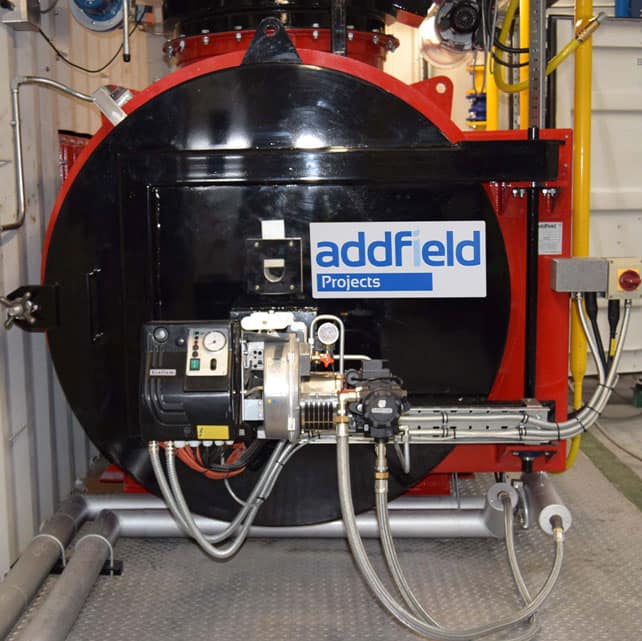
Reference installations
Why bring a project to us
One team from first consultation to commissioning, training and ongoing support.
Tell us about your waste problem
Speak to our team today!